

Rotated Axis of Polarization
Safety Warnings
Danger: Class IIIb Laser Hazard
Danger: Laser Safety Protocols
Purpose
Dissolving sugar in a water tank between crossed polarizers rotates the plane of polarized laser light, causing a previously blocked beam to reappear on the screen. Students observe optical activity from chiral sucrose molecules and verify that the transmitted light remains linearly polarized.
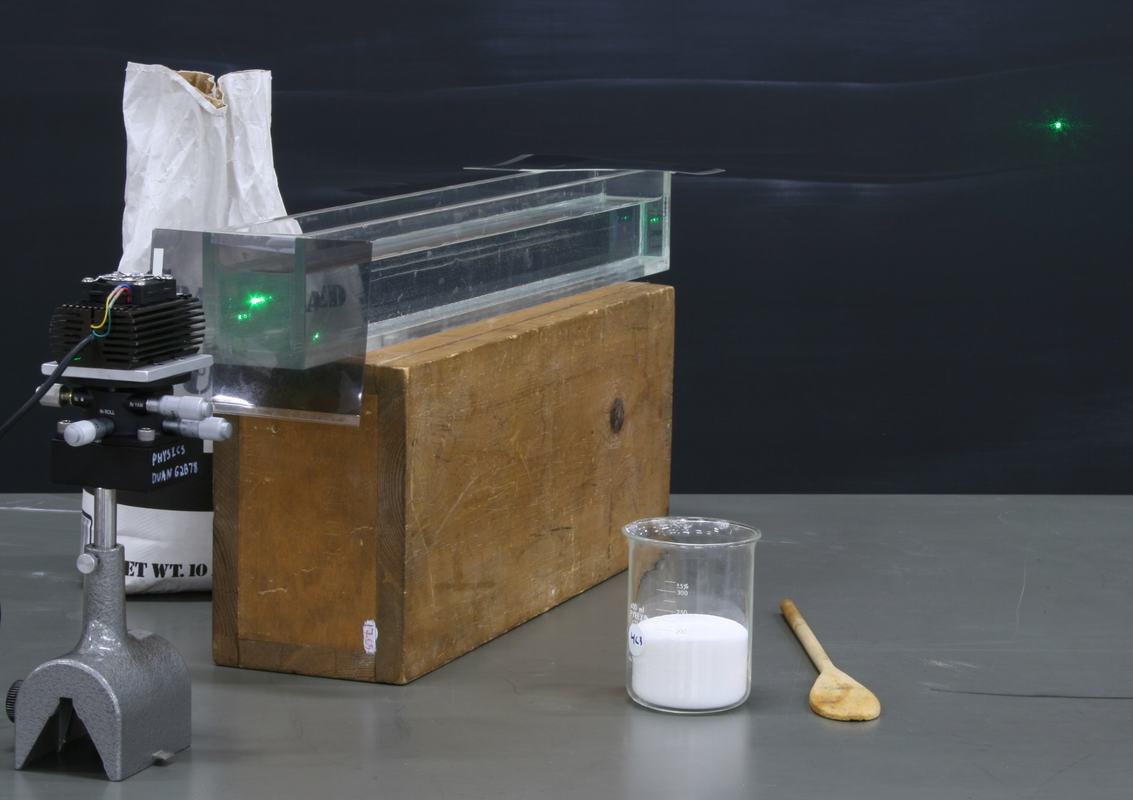
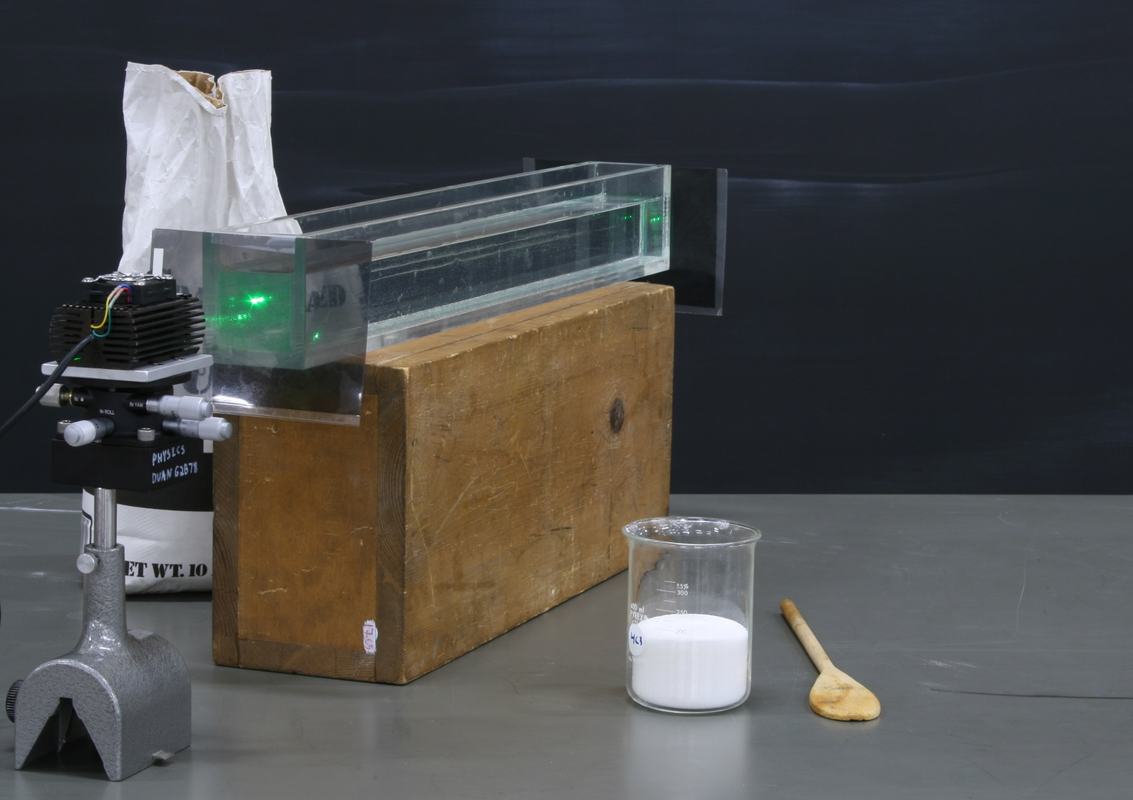

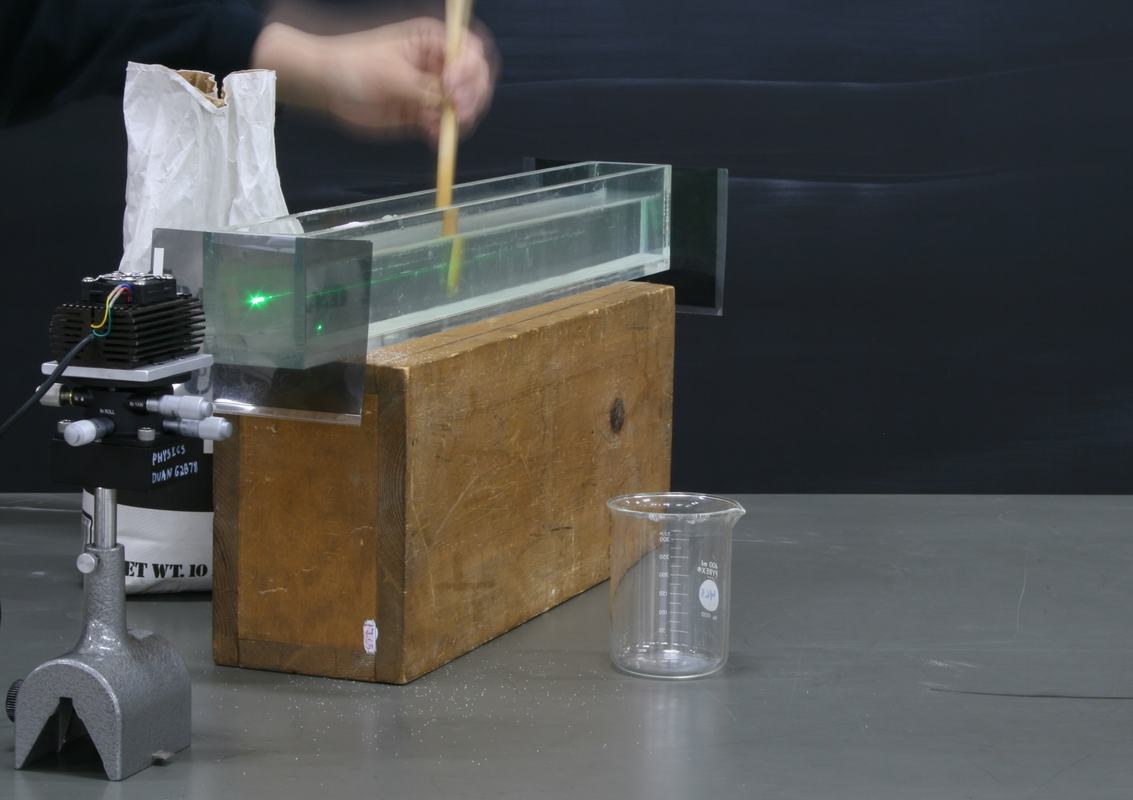

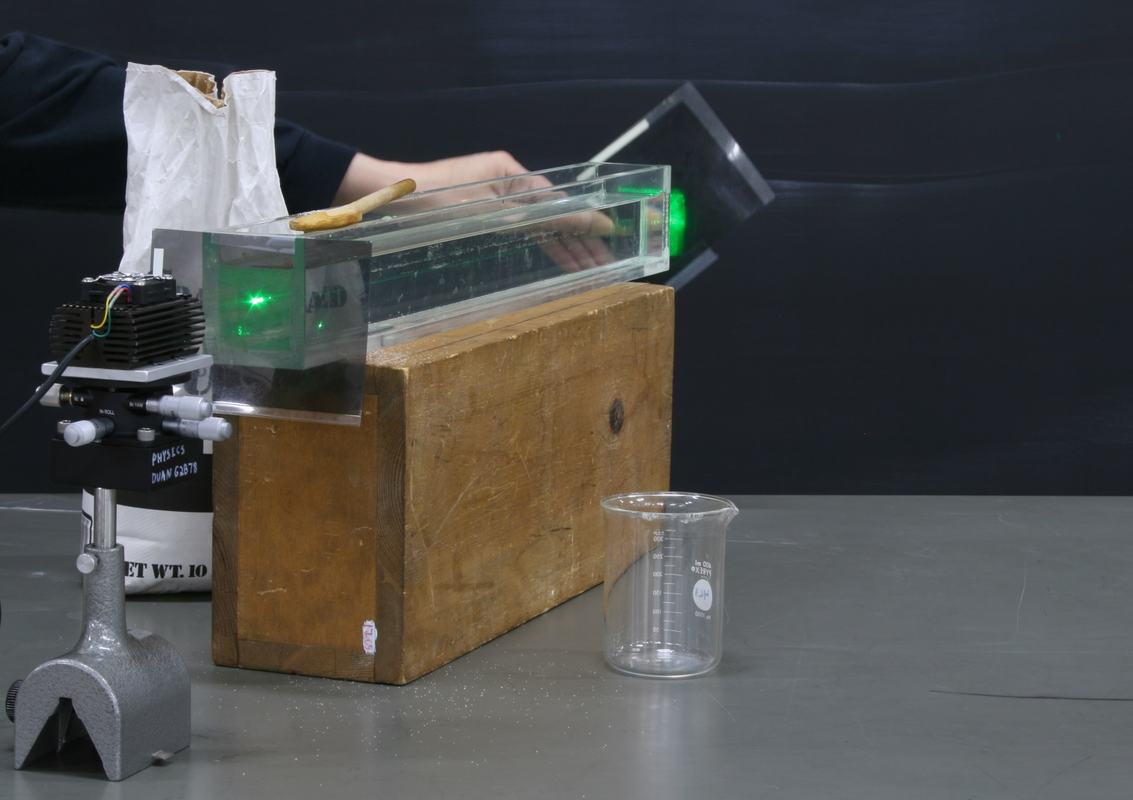
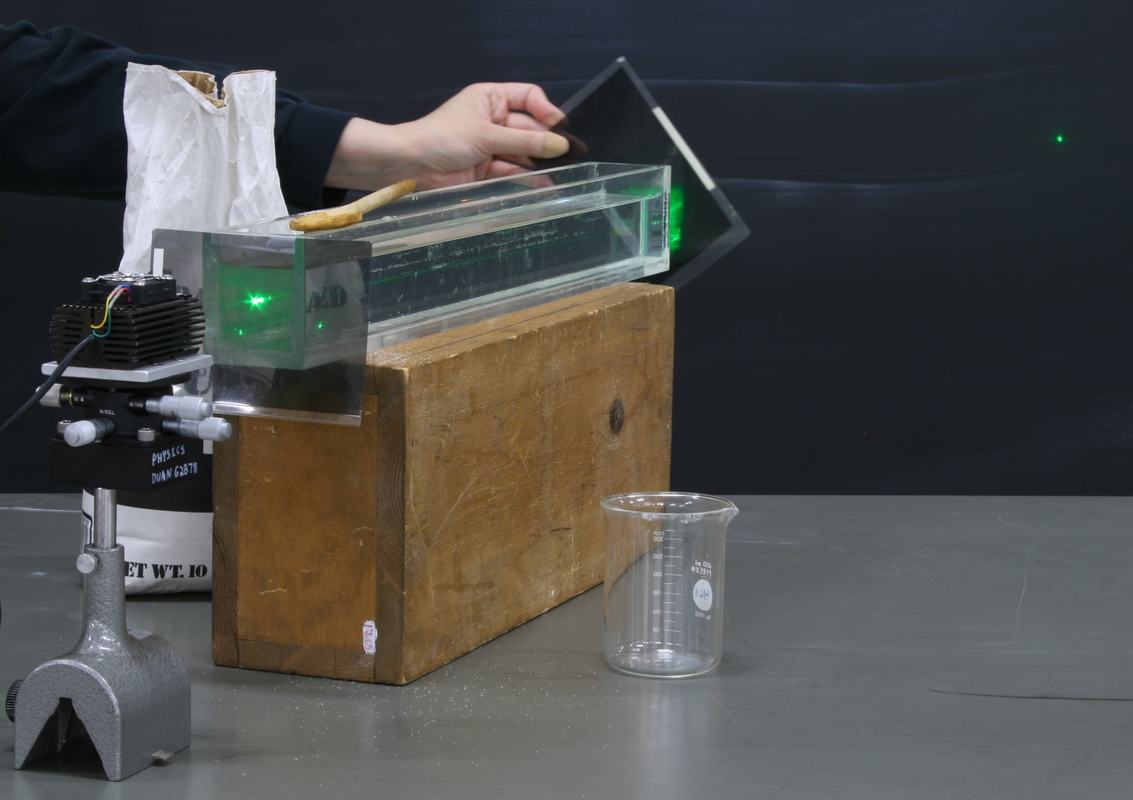
Figure 1:
Complete setup: glass tank on wood block, laser with heat sink at left, polarizers, beaker of sugar, and wooden spoon. The green laser beam is visible passing through the water-filled tank.
Figure 2:
Alternative view before adding sugar. The tank is filled just above halfway so the laser beam passes through the lower portion of the water.
Figure 3:
Pouring 200 mL of sugar into the tank. Stir gently with the spoon handle to avoid sloshing.
Figure 4:
Stirring the sugar solution with the spoon handle to promote dissolution.
Figure 5:
Solution after stirring but before complete dissolution. The laser scatters off undissolved sugar particles. As the sugar dissolves, a transmitted beam reappears on the screen.
Figure 6:
Holding the analyzing polarizer at the exit end of the tank. Light now passes through the previously blocking orientation because the sugar solution has rotated the polarization plane.
Figure 7:
Rotating the analyzing filter to show that the exiting beam is still linearly polarized -- just rotated relative to the incident polarization.