

Polarization: Transverse vs. Longitudinal
Purpose
Uses a giant Slinky and lead brick barrier to show that transverse waves can be polarized (blocked) while longitudinal waves pass through unimpeded. Provides a mechanical analogy for how polarizing filters selectively block transverse electromagnetic oscillations.
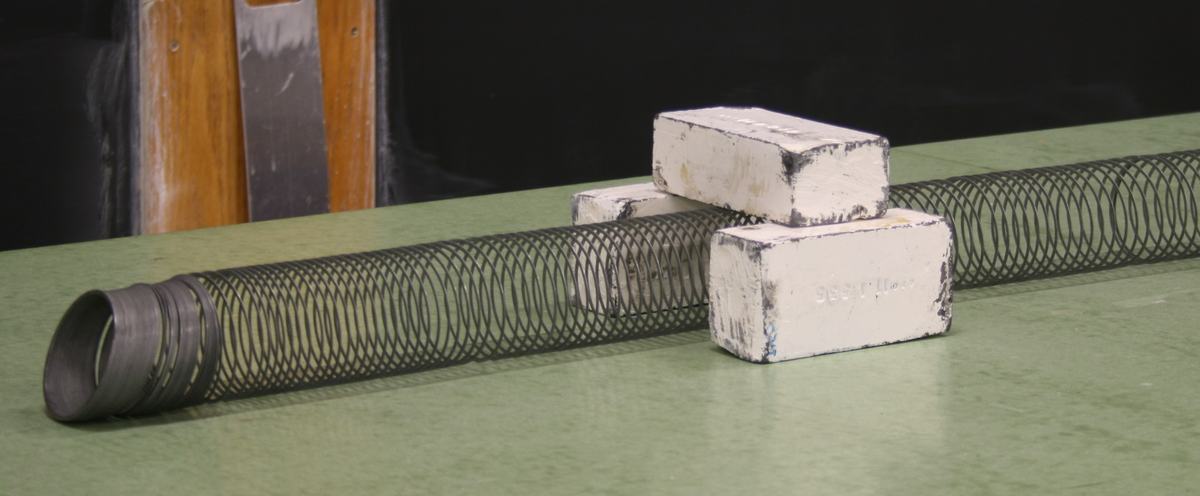
Figure 1:
Giant Slinky on the demo bench with lead bricks arranged as a tunnel barrier. The gap allows longitudinal compression pulses through but blocks transverse oscillations in both horizontal and vertical directions.