

Persistence of Vision
Safety Warnings
Warning: Photosensitive Seizure Warning
Purpose
Demonstrates persistence of vision and the stroboscopic effect using rotating patterned disks illuminated by a strobe light. Students observe how discrete images merge into continuous motion or appear frozen, illustrating the temporal resolution limits of human vision.

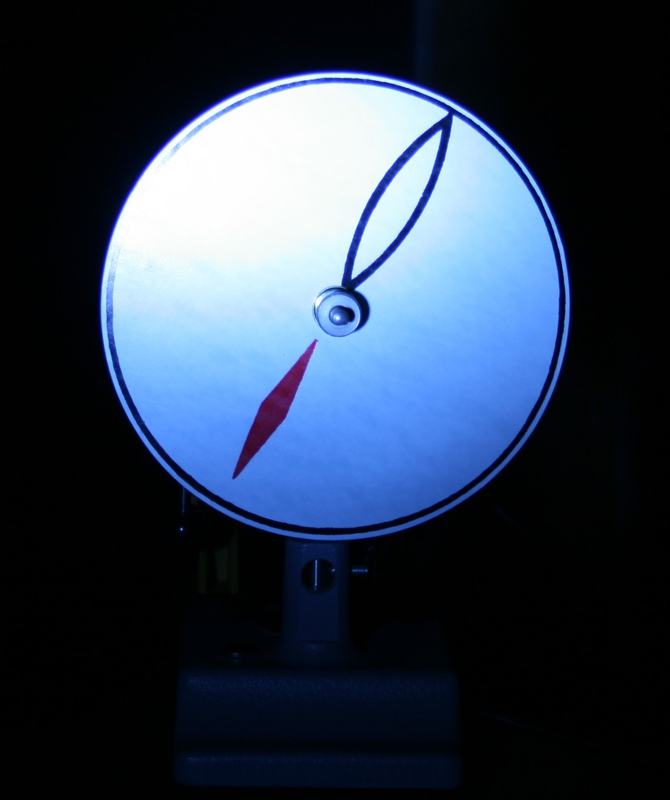
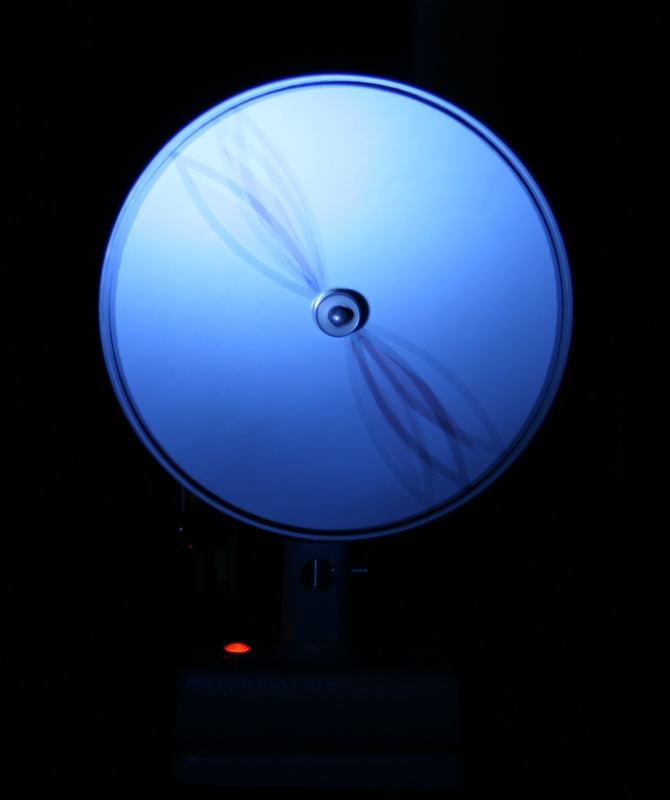

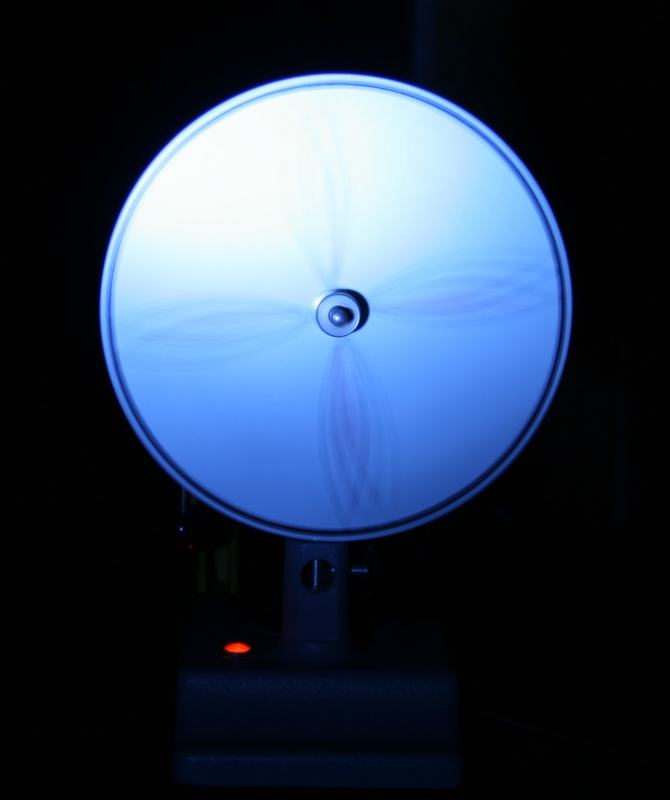
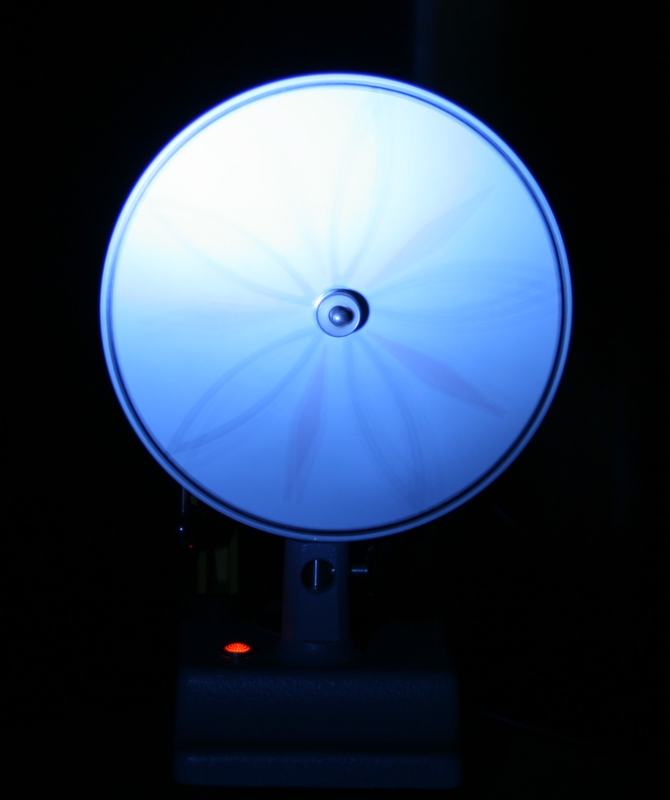
Figure 1:
Motorized rotator with the bird-and-cage disk mounted, and the full collection of interchangeable illusion disks.
Figure 2:
Bird-and-cage disk under strobe illumination. When spinning, the two images on opposite sides merge so the bird appears inside the cage.
Figure 3:
Radial spoke pattern under strobe illumination with partial motion blur — the strobe frequency is not quite matched to the rotation speed.
Figure 4:
A different strobe-to-rotation frequency ratio produces a more blurred pattern with apparent rotational symmetry.
Figure 5:
At higher rotation speed relative to strobe frequency, persistence of vision smooths the radial lines into a nearly continuous pattern.
Figure 6:
Dense radial pattern under strobe illumination showing nearly frozen spokes with slight residual blur from speed mismatch.