

Short & Long Wave UV
Safety Warnings
Warning: UV Radiation Exposure Hazard
Warning: Mercury Vapor Warning
Purpose
Glass transmits longwave UV but blocks shortwave UV, demonstrated using a phosphorescent disc as a visible indicator. A plastic container with CFL phosphor fragments shows a similar blocking effect. Students learn that material transmission depends on photon wavelength/energy.

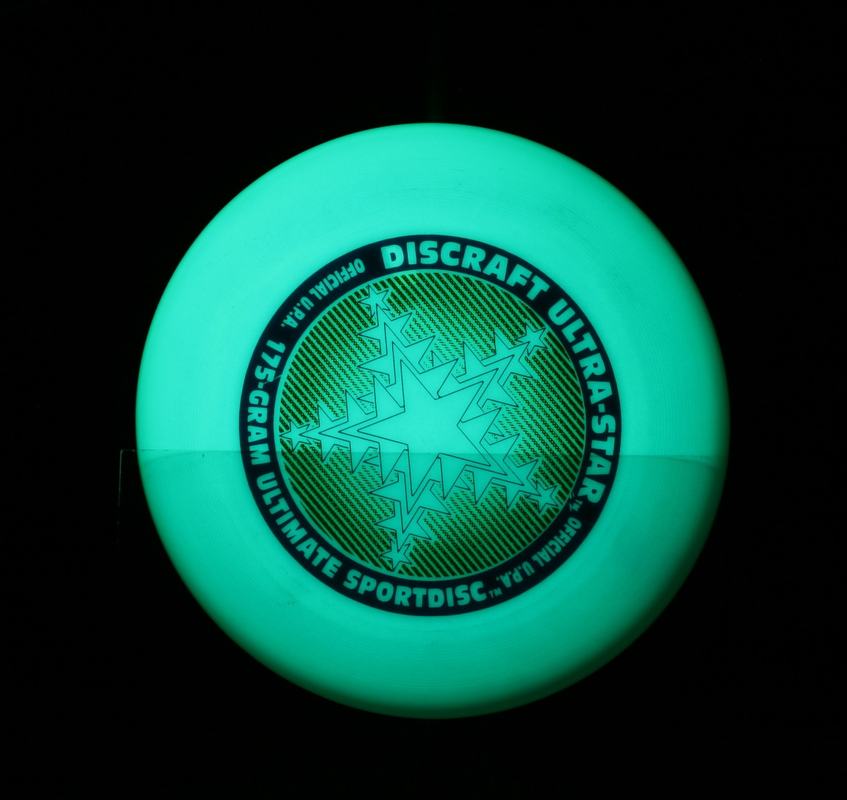
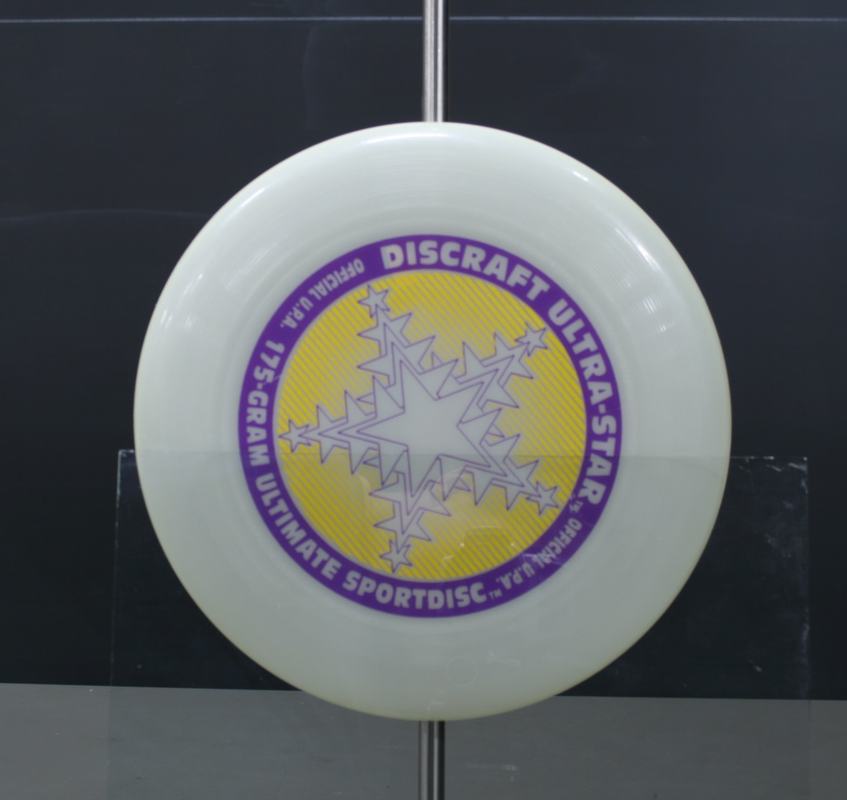

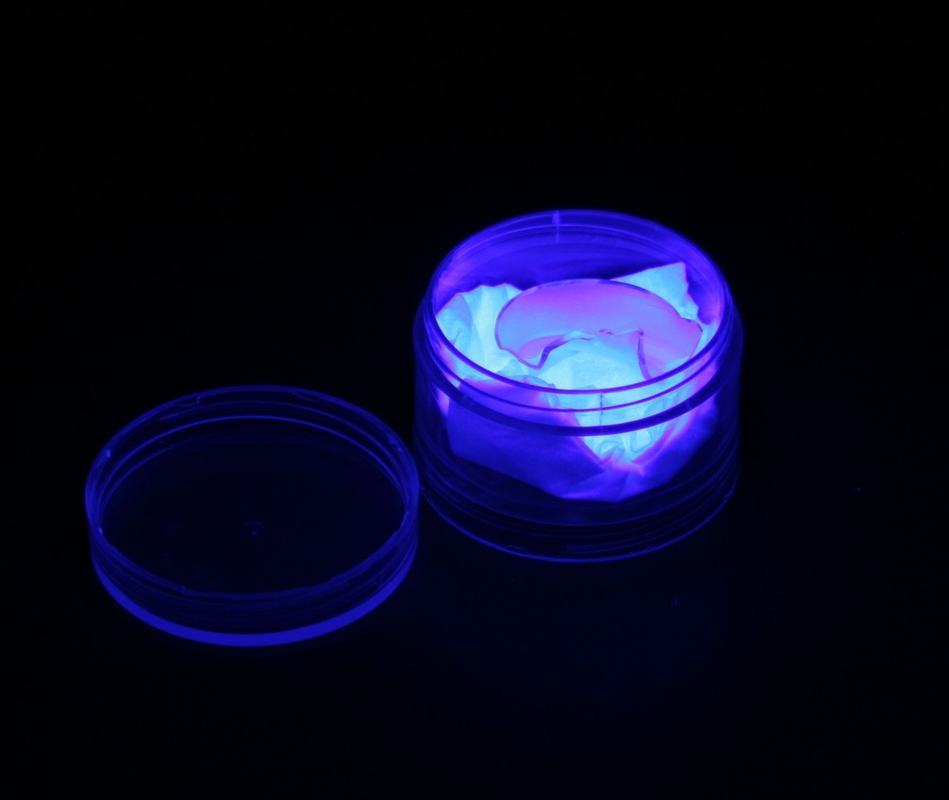
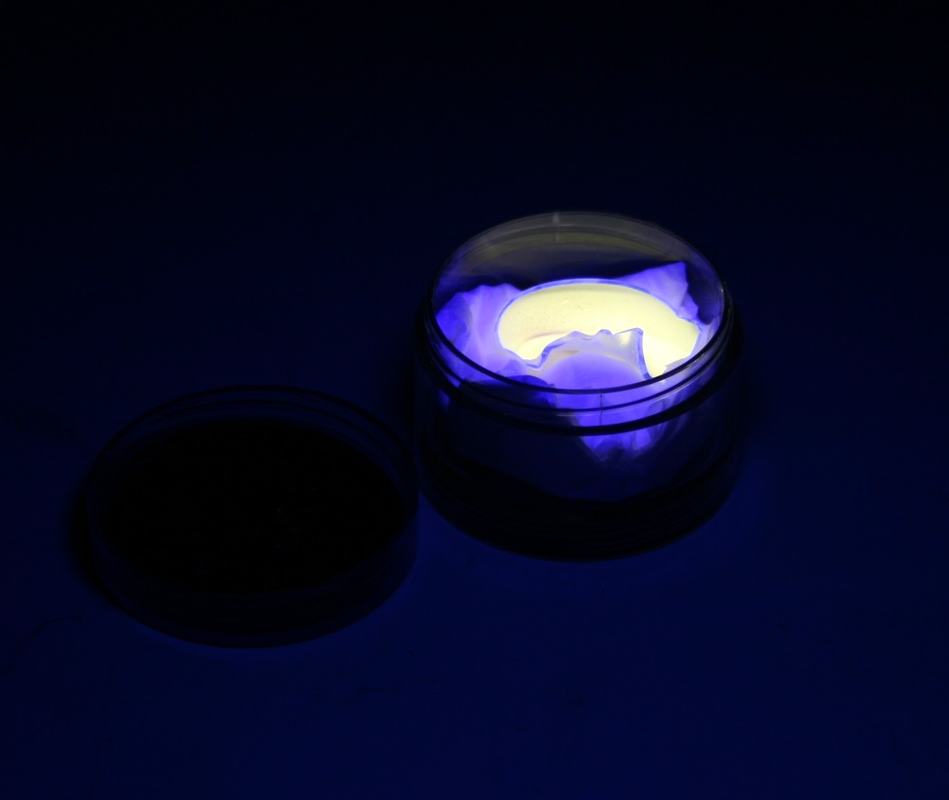
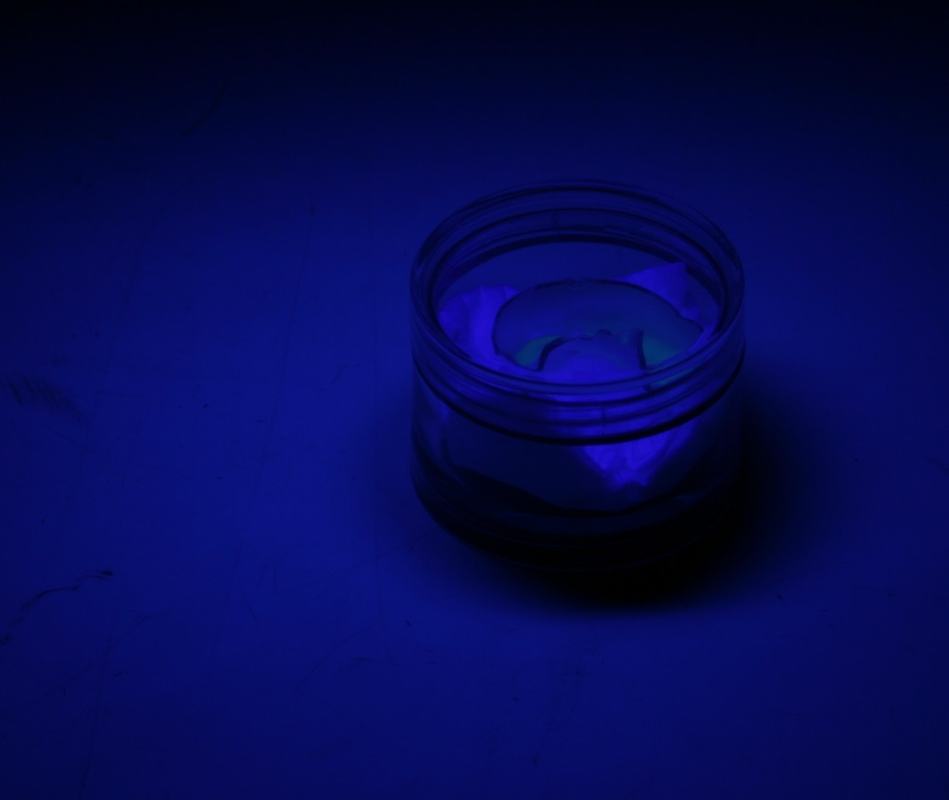
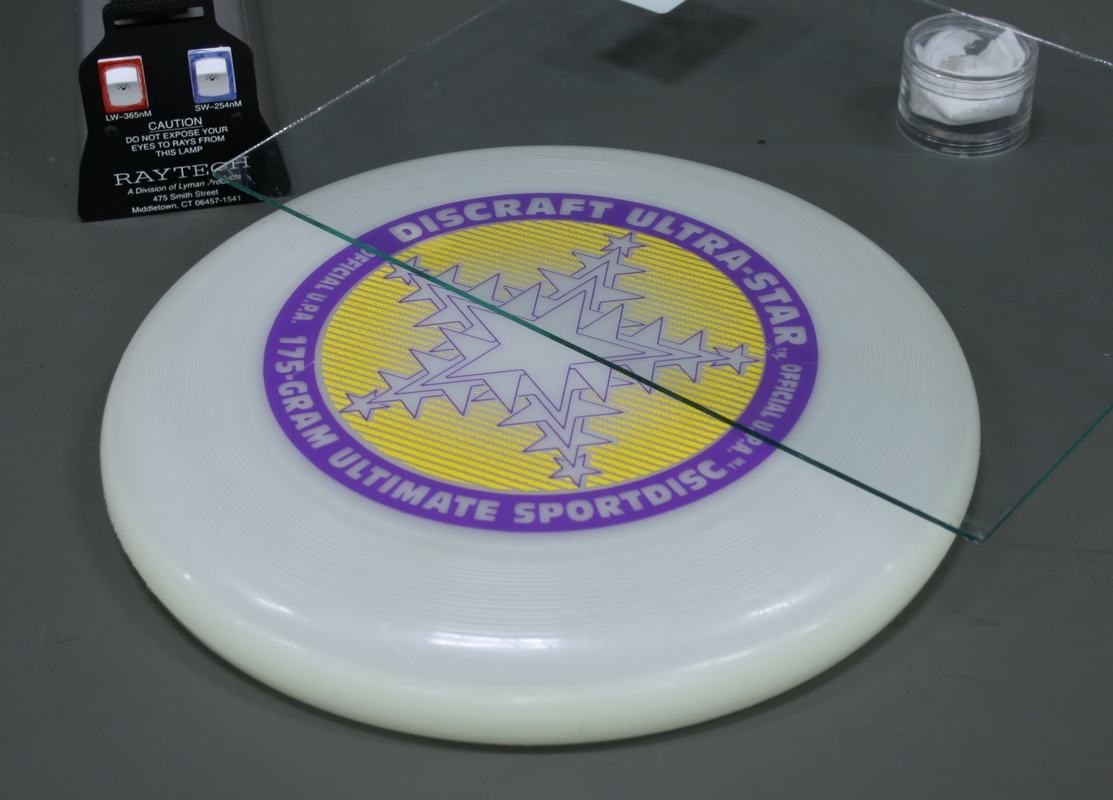
Figure 1:
The phosphorescent disc glows under UV exposure. With a glass plate partially blocking the UV source, the shadowed region shows reduced fluorescence.
Figure 2:
Full disc fluorescence under direct UV exposure, showing baseline response without any UV-blocking barrier.
Figure 3:
The disc under ambient lighting appears white — the phosphorescent material only fluoresces when excited by UV wavelengths.
Figure 4:
Clear plastic container holding CFL phosphor fragments, shown under normal lighting with lid removed.
Figure 5:
With the lid removed, shortwave UV excites the CFL phosphor strongly. Replacing the lid blocks the shortwave UV and stops the fluorescence.
Figure 6:
Close-up of phosphor fluorescence under shortwave UV with lid removed, showing strong emission.
Figure 7:
With the lid on, the plastic blocks shortwave UV and fluorescence is minimal — demonstrating that the plastic is opaque to short UV wavelengths.
Figure 8:
Complete setup: phosphorescent disc with glass pane, Raytech dual-wavelength UV lamp (red switch = longwave, blue switch = shortwave), and CFL phosphor container.
Demo Apparatus
- 1
- 1