

Hydrogen Orbital Models
Purpose
Student-made physical models illustrate the three-dimensional shapes and probability distributions of hydrogen electron orbitals (s, p, and d). Helps students visualize orbital geometry, nodal surfaces, and the probabilistic nature of electron location.


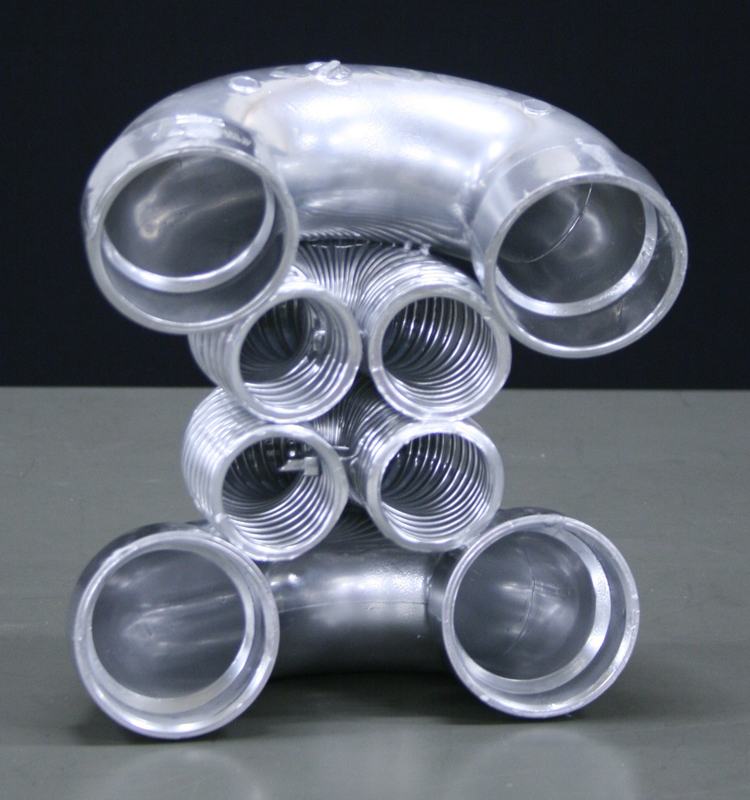
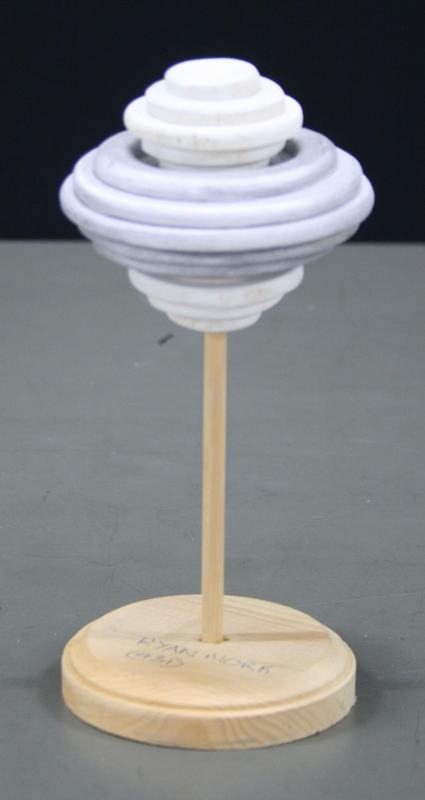

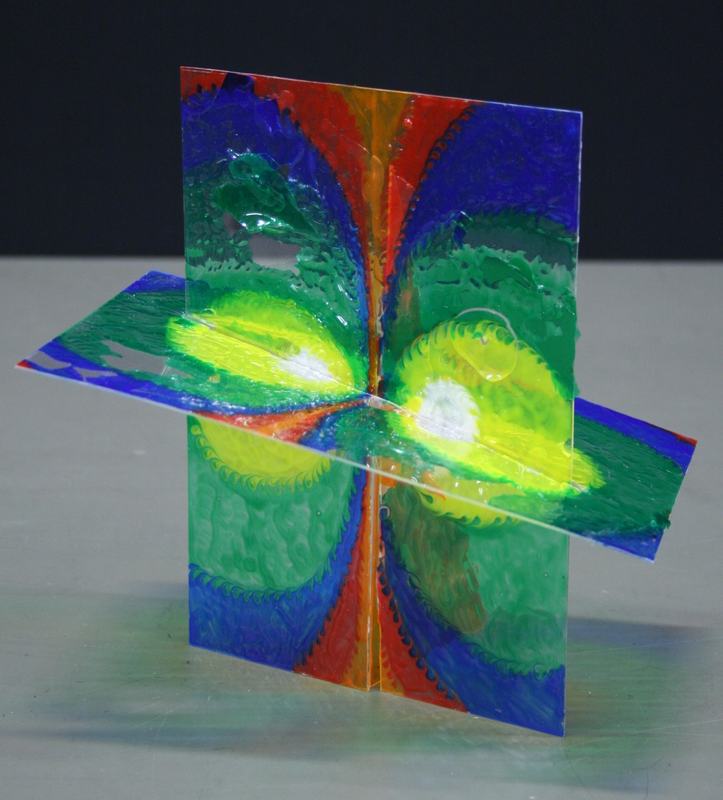
Figure 1:
This spherical s-orbital model demonstrates the uniform probability distribution around the nucleus. The spherical symmetry represents the zero angular momentum (l=0) characteristic of s orbitals.
Figure 2:
This model illustrates the spatial arrangement of multiple orbital shapes, showing how different quantum numbers produce distinct geometric configurations in three-dimensional space.
Figure 3:
Transparent construction reveals the internal structure and allows viewing from multiple angles, helping students understand the three-dimensional nature of orbital probability distributions.
Figure 4:
This model represents a p-orbital's dumbbell shape through stacked circular cross-sections, illustrating the nodal plane at the nucleus where electron probability is zero.
Figure 5:
Cross-sectional view of orbital probability density using color gradients to represent regions of higher and lower electron probability, with the brightest center indicating maximum probability density.
Figure 6:
This d-orbital model shows the four-lobed clover structure characteristic of certain d orbitals, with color coding indicating probability density variations and nodal planes visible between lobes.