

Colored Shadow Illusion
Purpose
Demonstrates that color perception involves neural processing, not just physics. Superimposed white and colored lights create two shadows: one in the color of the colored source, and one that appears to be the complementary color despite receiving only white light. This is direct evidence for the opponent processing theory of color vision.
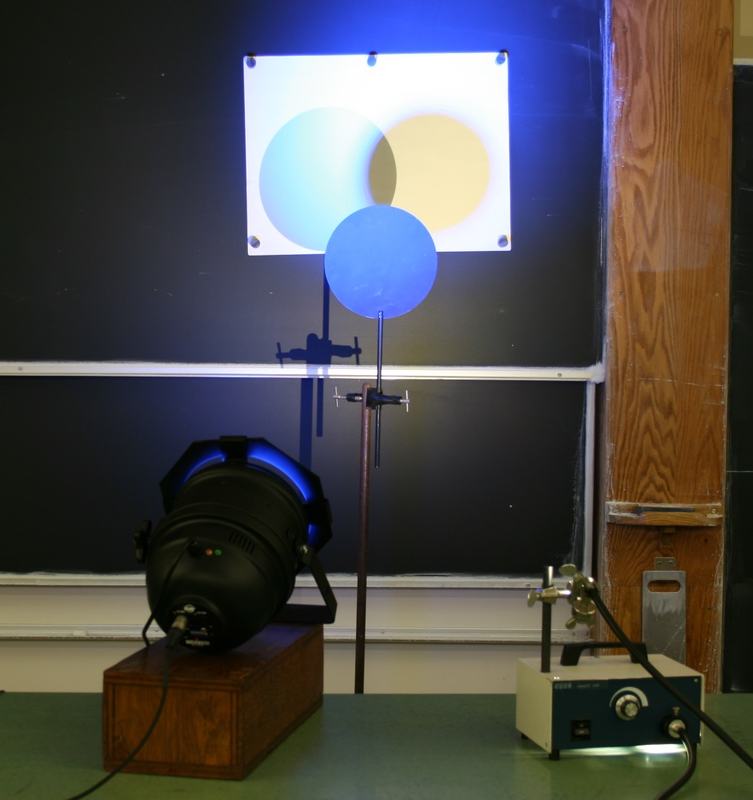
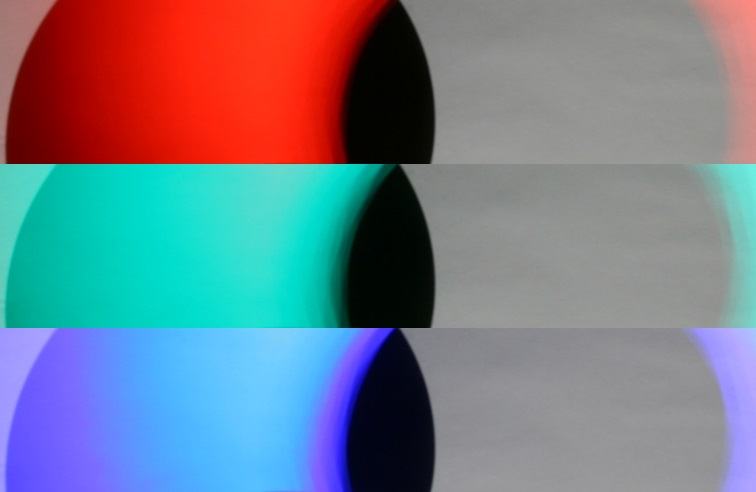
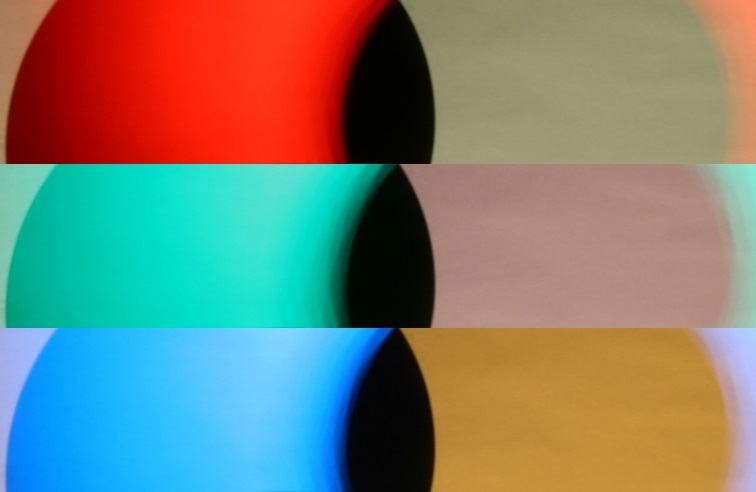
Figure 1:
Complete setup: LED spotlight (left), circular mask on ring stand (center), optical cable white light source (right). The screen shows a cyan shadow from blocking the white light, a yellow shadow from blocking the colored light, and a dark region where both are blocked.
Figure 2:
Montage with camera white balance preset to match the white light source. The colored shadows (left) appear vivid, but the white-light shadows (right) look neutral/gray — close to the physical reality of the light reaching them.
Figure 3:
Same shadows with camera auto white balance (mimicking human vision). The white-light shadows now appear in complementary colors — cyan, magenta, and yellow — just as the eye perceives them in person.
Equipment
- 1