

Red Without Red
Safety Warnings
Warning: Floodlight Heat Warning
Purpose
Demonstrates color constancy: the brain's assumption about ambient illumination causes a region lit by only white light to appear vividly red. Students see that perceived color depends on context, not just the wavelengths reaching the eye.
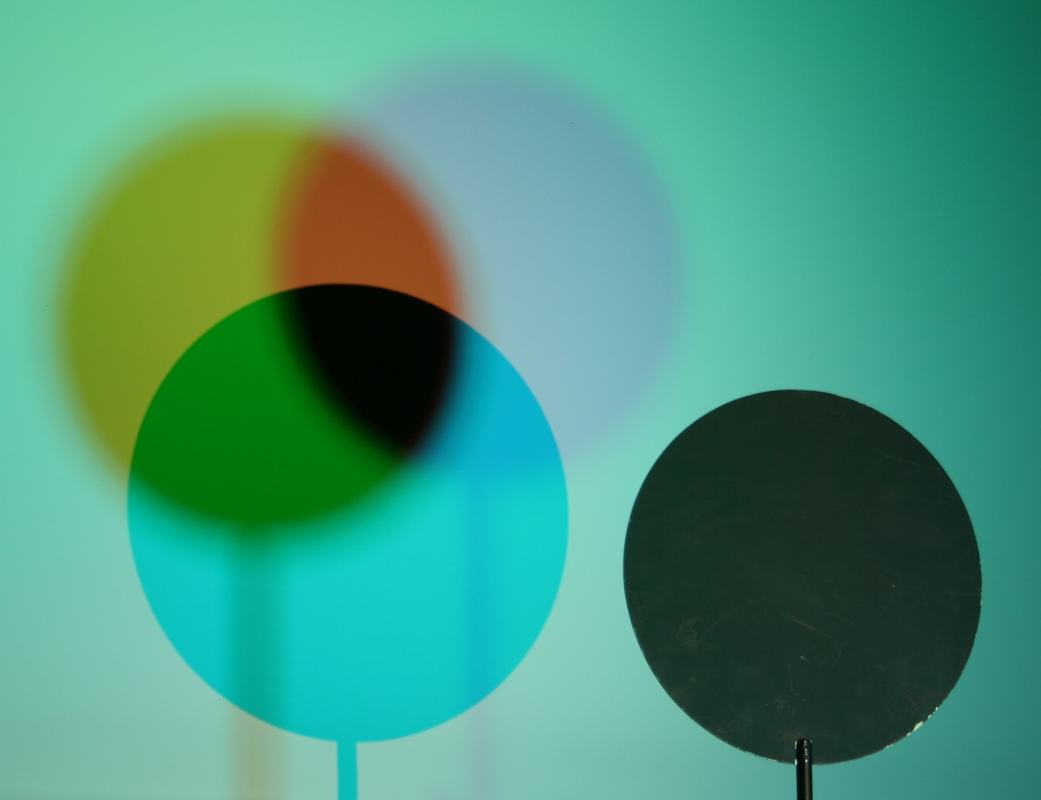
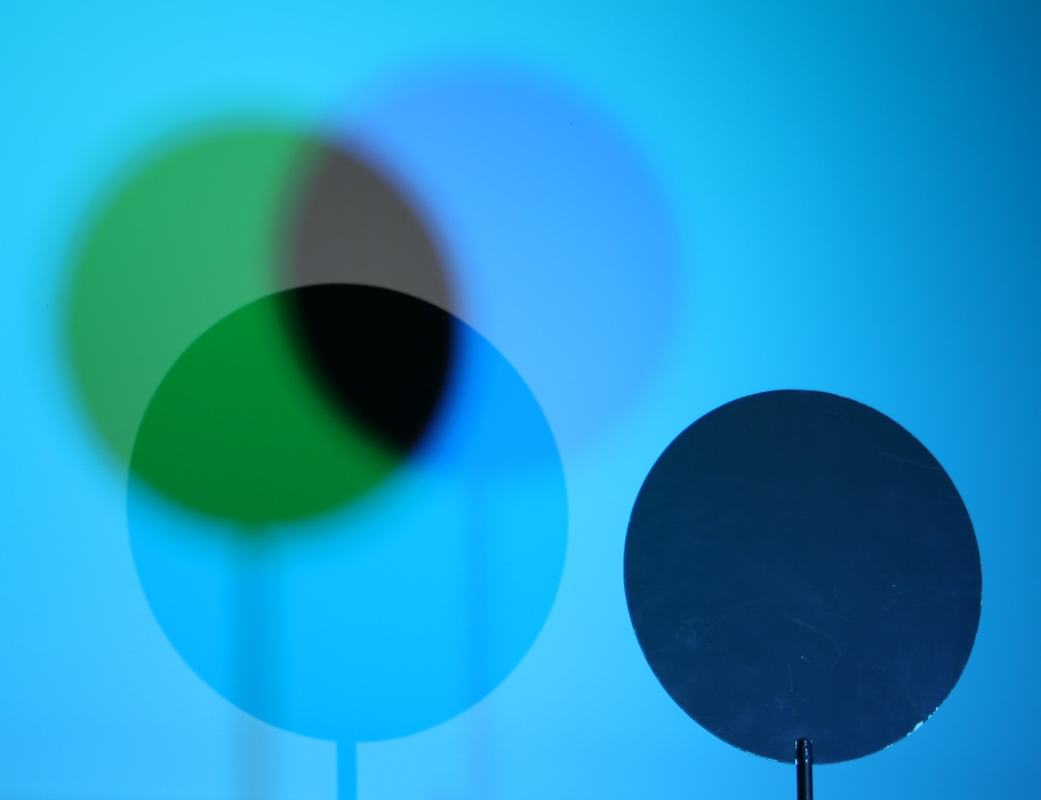
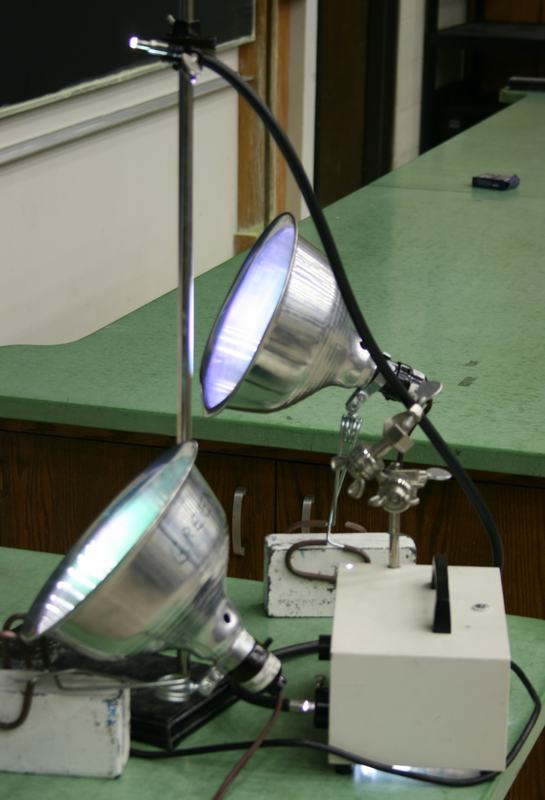

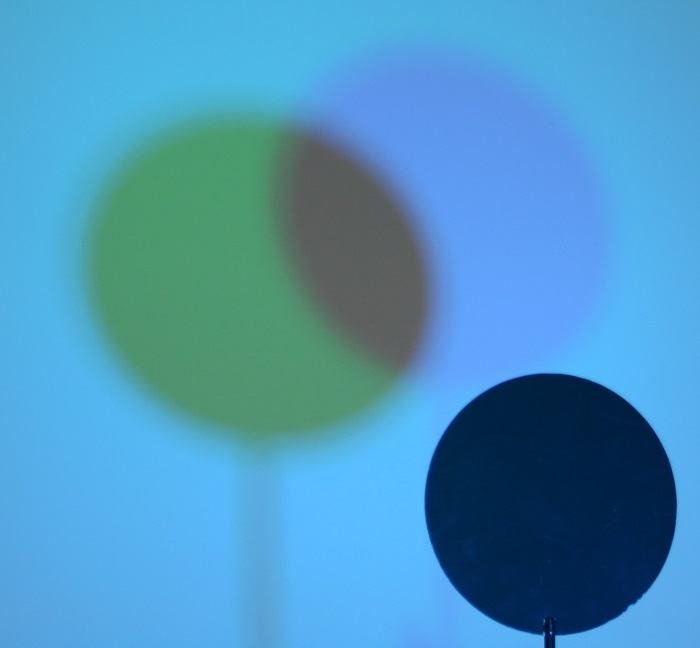
Figure 1:
Auto white balance photo: the overlapping shadows appear to show CMY color mixing. The red-orange region is actually white light only — color constancy creates the illusion.
Figure 2:
Preset white balance photo of the same scene. Without the camera's color constancy compensation, the "red" region appears gray — revealing the true physical colors.
Figure 3:
The green and blue floodlights with the white cable lamp. Arrange the three sources in an equilateral triangle aimed at the same spot on the projection screen.
Figure 4:
Two-source version (auto white balance): with room lights on, the green shadow becomes yellow, the blue shadow becomes lavender, and the overlap appears brownish-red.
Figure 5:
Same two-source scene with preset white balance. The overlap region appears gray rather than red, confirming the red is perceptual, not physical.
Equipment
- 1