

Reflecting Telescope
Safety Warnings
Danger: Never Point at the Sun
Warning: Handling Optical Surfaces
Purpose
Compares Newtonian and Cassegrain reflecting telescope designs side-by-side. Students see how different secondary mirror configurations (flat diagonal vs. convex) redirect light to different eyepiece locations, and why reflectors avoid chromatic aberration.


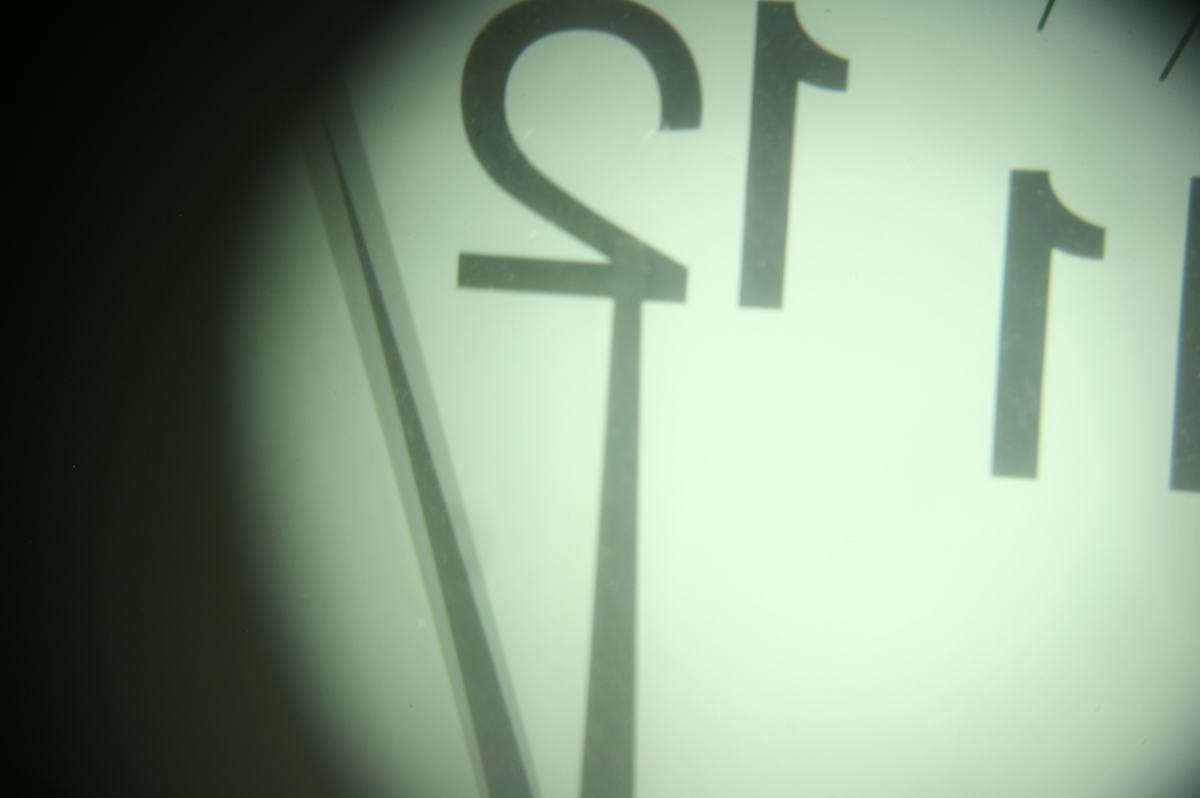
Figure 1:
Newtonian reflector (Orion) on a Dobsonian alt-azimuth mount. The eyepiece is at the top side of the tube, where a flat diagonal secondary mirror redirects light 90° from the primary.
Figure 2:
Schmidt-Cassegrain reflector (Meade) on a fork mount with setting circles. The eyepiece is at the rear — light reflects off the primary, bounces off a convex secondary, and passes back through a hole in the primary.
Figure 3:
Magnified view of a wall clock through the telescope. The image is inverted, as expected for an astronomical telescope. Point a video camera into the eyepiece to display this to the class.