

Wave Addition
Purpose
Demonstrates the superposition principle by mechanically adding two sine waves. Students observe constructive and destructive interference, and see how combining waves of different wavelengths produces complex waveforms.

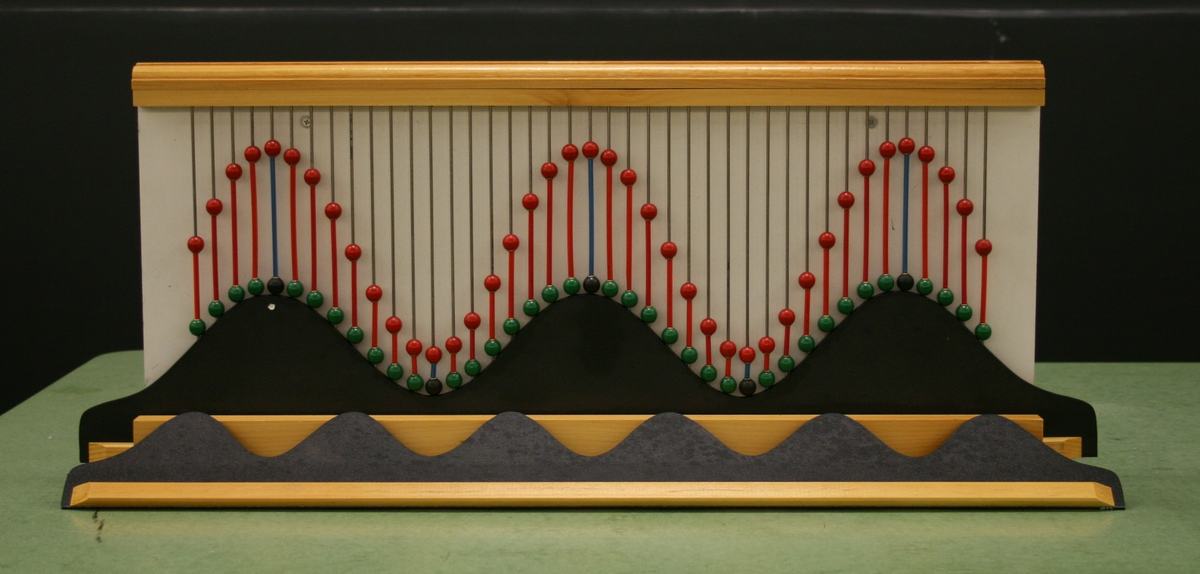

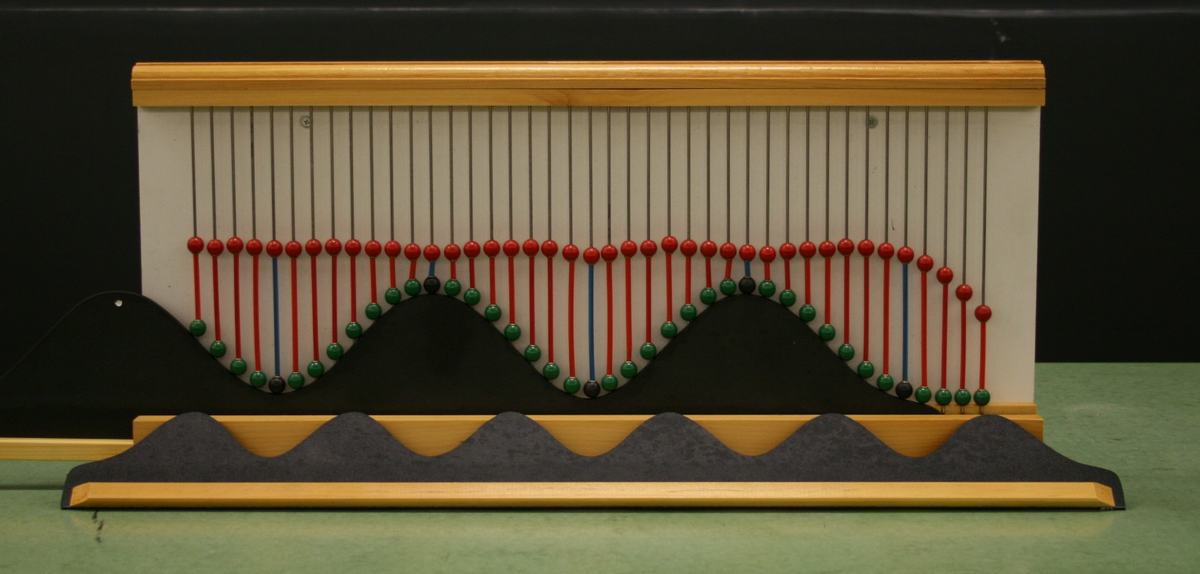


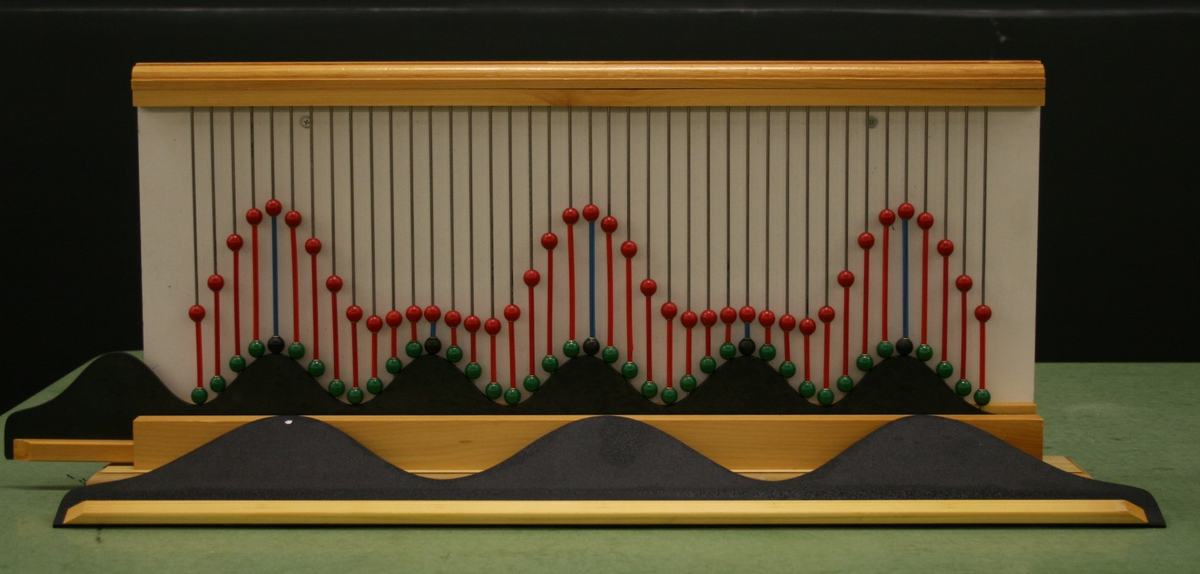
Figure 1:
The apparatus in its initial configuration shows three complete wave crests. Red beads mark the upper boundary and green beads the lower boundary, with blue straws indicating crest positions and black straws marking troughs.
Figure 2:
Configuration showing the baseline sine wave pattern before superposition. The regularly spaced crests and troughs establish the fundamental wavelength and amplitude for comparison.
Figure 3:
The beads have been displaced by one of the solid wave templates, showing how wave amplitude varies when two waves of equal wavelength are superposed with a phase difference.
Figure 4:
Near-complete destructive interference is demonstrated when two waves of equal wavelength are superposed approximately 180° out of phase, resulting in minimal amplitude in the central region.
Figure 5:
Complex interference pattern created by adding waves of different wavelengths and amplitudes. This demonstrates how superposition of dissimilar waves creates more intricate waveforms.
Figure 6:
Beat pattern formed when two waves of slightly different wavelengths interfere, showing amplitude modulation. This pattern is analogous to acoustic beats heard when two similar frequencies combine.
Figure 7:
Enhanced amplitude pattern resulting from constructive interference when waves are superposed in phase. The increased crest heights clearly demonstrate how wave amplitudes add when peaks align.
Demo Apparatus
- 1