

Arm Model
Purpose
A mechanical arm model demonstrates the human arm as a lever system. Students measure the muscle force required to hold a load and see how it depends on arm angle and attachment point, illustrating torque equilibrium and mechanical advantage in a biological context.
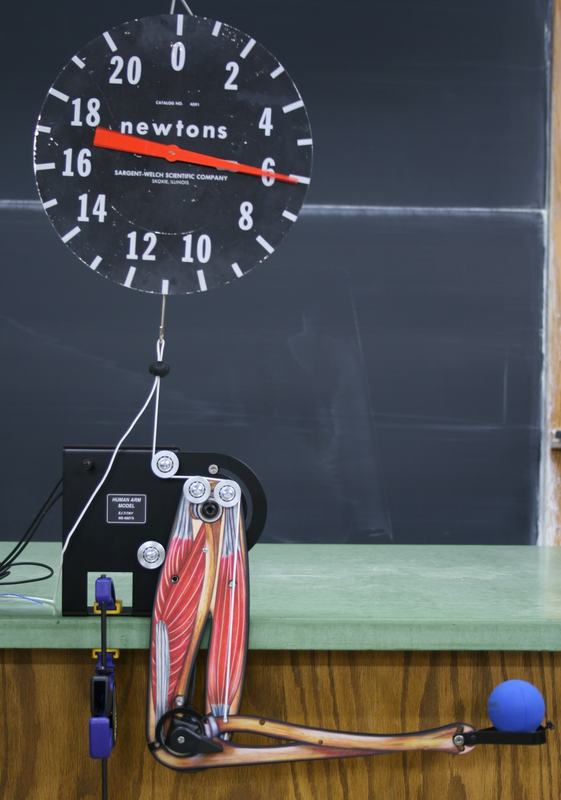
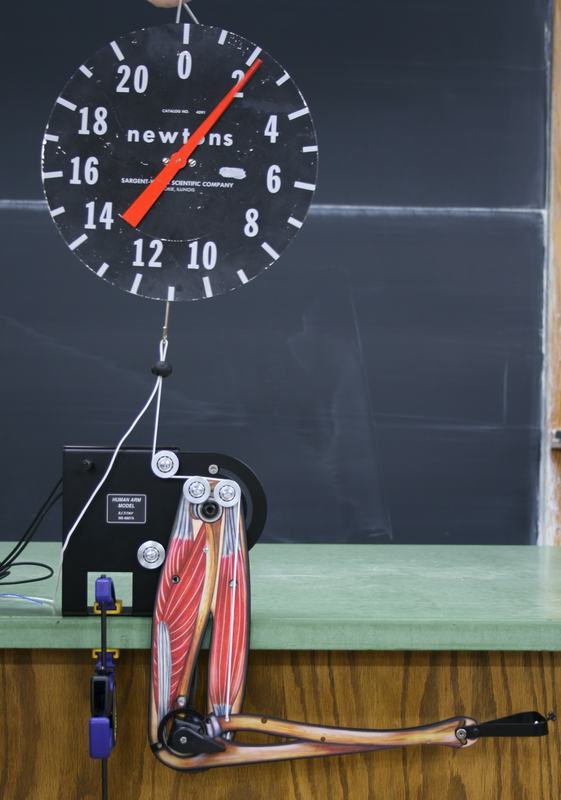
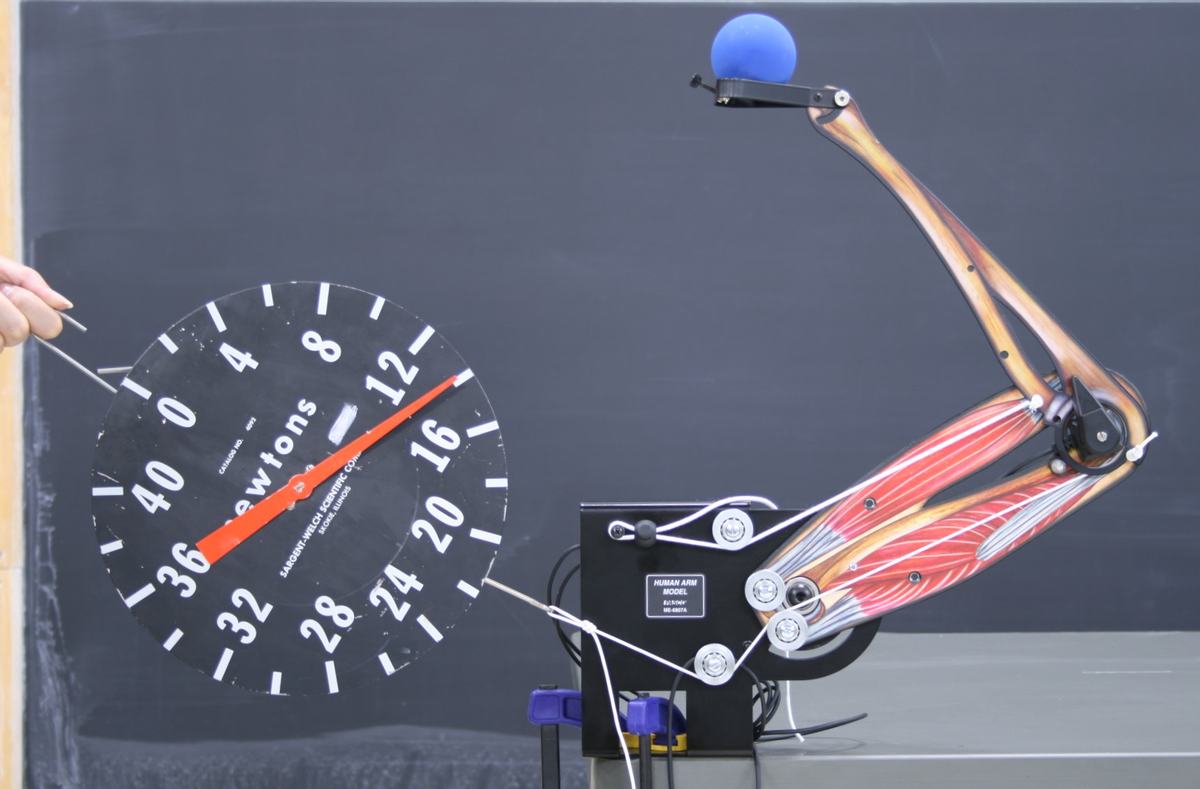
Figure 1:
Arm model configured for bicep action with the 0–20 N spring scale. The cord simulates the bicep muscle; the scale reads the tension required to hold the blue ball.
Figure 2:
With the forearm extended further, the spring scale shows increased muscle force — the changing moment arm requires more tension to maintain equilibrium.
Figure 3:
Arm nearly horizontal holding the ball at full extension, now using a 0–40 N scale. This position maximizes the load moment arm, requiring substantially greater muscle force (~18 N) to maintain equilibrium.